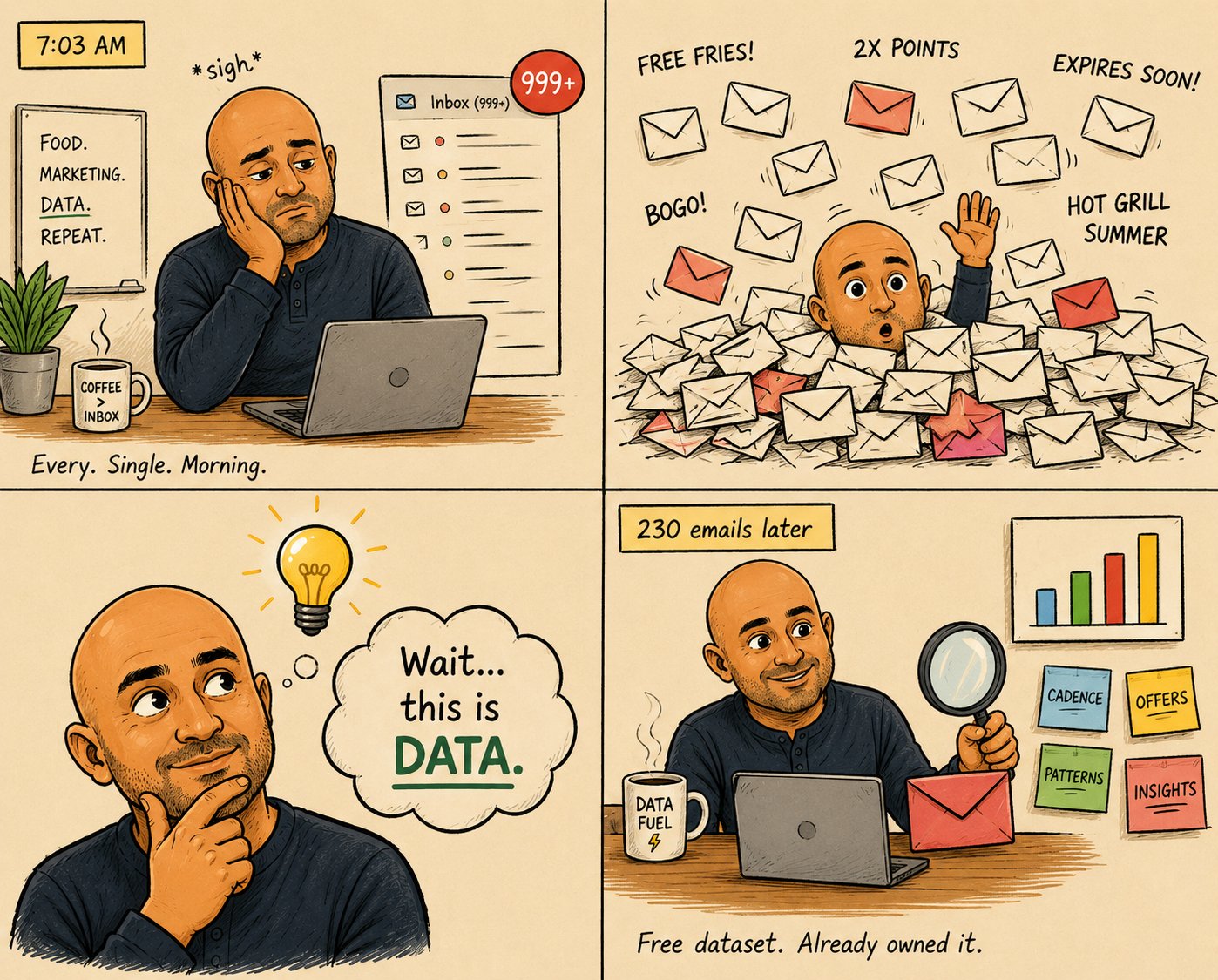
A months-long, accidental study of 22 restaurant brands, one Gmail inbox, and everything they got right and wrong.
I am signed up for a lot of restaurant email lists. Like, a lot. Burger places, sandwich places, salad places when I began my health journey, a hot chicken chain, two different bowl concepts, and at least one pizza brand that emails me every single evening like a needy ex.
For YEARS I treated this as white noise, unless I wanted to scope out deals, or competitive research.
Then it hit me: this is a dataset. A really good one. Because I'm not just subscribed to these brands, I have actual history with them. Some know me as a regular. Some haven't seen me in a year. Some have literally never gotten a dollar from me.
My inbox shows how twenty-two different marketing teams treat a regular, a lapsed customer, and a ghost.
That's not clutter. That's one big ass study I've been running by accident.
So I did the obvious thing: I pointed an agent at months of my own Gmail and asked it to read everything. Twenty-two multi-location brands, hundreds of marketing emails over the past several months.
Brand-by-brand sweeps for cadence and patterns, then full teardowns of the standouts: offer mechanics, expiration windows, personalization, where the fine print lives, what the subject lines are doing.
Here's what fell out.
Summer 2026 is the Summer of the Challenge
The single clearest trend: six of the brands launched an opt-in challenge this summer. Not points programs. Challenges. Chipotle's "Summer of Extras." CAVA's "Flavor Passport." The Habit's "Hot Grill Summer" (yes, a Hot Girl Summer pun, and yes, the email had a 💅 in the subject line). Port of Subs' "Sub Streak." Panda Express runs a "Wok Wednesday" game every single week.
The formula is nearly identical everywhere: opt in, complete a small number of qualifying orders, get a free thing. The bar is always low enough to feel winnable. Two visits. Four visits in a month. The Habit's version even lets you pick your reward when you finish, which is a nice little touch that does a lot of work.
Cafe Zupas' Protein Stacking Challenge was interesting. You earn a bonus point per gram of protein you order, and the person who orders the most protein wins a gym membership worth up to $300 a month. GAINZ. That is a restaurant paying for the gym you'll need after winning their contest. Incredible. No notes.
Nobody types promo codes anymore
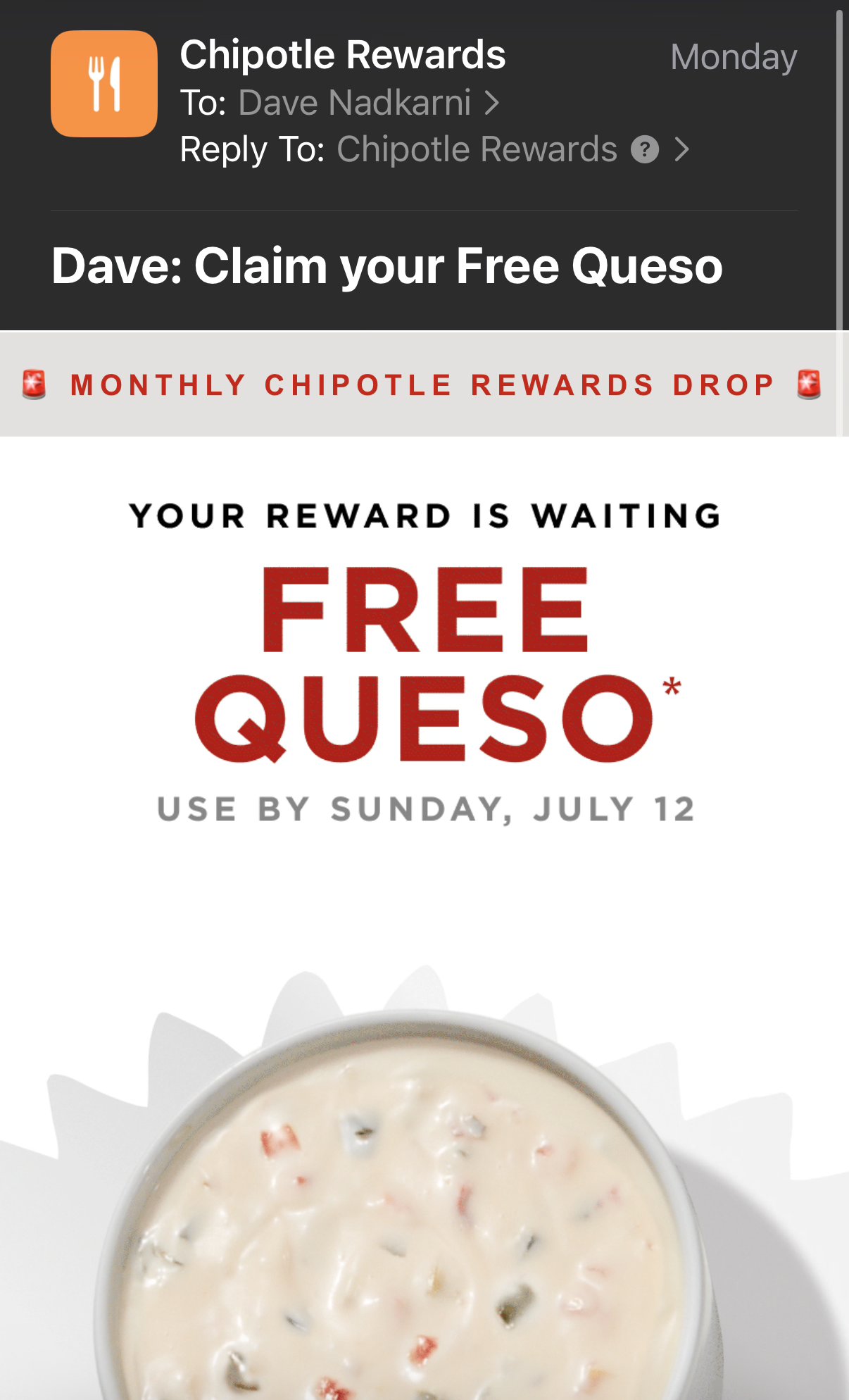
The second thing you can't unsee: the promo code is dying. The leading programs don't send you a code. They put the reward directly in your account and tell you about it. Chipotle's version is a masterclass in five words: "we dropped a reward in your account." Then a named deadline ("Use your exclusive offer by Sunday, July 12") and a seven-day clock, which turns out to be the industry-standard fuse.
Once the reward lives in your account, the emails write themselves. Literally. Jimmy John's sends me almost six emails a week, and nearly every one is generated by the same machine: reward drops, reminder, expiry alarm ("🚨 $5.99 Favorite reward expires soon!"), next reward drops. Nobody is brainstorming those. The offer state machine IS the content calendar.
Meanwhile, the one brand that made me type a code in all caps, warning in the fine print that "Code is case sensitive. Offer code will only work in all caps," made me feel like I was defusing a bomb to get a free sandwich.
Everything is online-only, and it's not subtle
Every single challenge requires logged-in, first-party digital orders. The Habit's challenge doesn't count orders at their own register. Or their own kiosk. Their own kiosk! Points multipliers are app-only. BOGOs exclude third-party delivery.
The reason is obvious once you see it: an offer redeemed anonymously at a counter teaches the brand nothing. An offer redeemed online captures a name, an email, and an order history. These brands aren't discounting food. They're buying data with food, and they've all quietly agreed on the terms.
The cadence tells and the lifecycle tells
Some things you only notice with 90 days of timestamps:
CAVA emails at 7:03 in the morning almost to the minute, nearly every day, all summer. That's not a person. That's a calendar with a heartbeat.
A national pizza brand hits the same evening window every day, right when you're weakest on the "what's for dinner" question. Respect.
Chipotle treats me like a regular because I am one: a monthly personalized freebie with my name in the subject line ("Dave: Claim your Free Queso") and a little flattery in the body ("You've been keeping it Real").
Taco Bell, where I've been a ghost, sent exactly one email in 90 days: "$10 off just for you. Here's something to say thanks." Unprompted. It was weirdly touching.
And then there's the sandwich chain I actively order from that has sent me zero marketing emails. Zero. Order confirmations only. I hand them money regularly and they've never once tried to speak to me. Somewhere a CRM license is being paid for nothing.
A small delight along the way: Dave's Hot Chicken hides jokes in their legal disclaimers. Deep in the fine print of one email: "No cash value. Wow, still reading...are you a lawyer? Tax extra." Whoever is sneaking bits into the compliance section deserves a raise.
The quiet consensus
Nobody coordinated this, but after ALL these emails, it's hard to miss that the best programs have all landed on the same four rules:
The deal arrives, you don't fetch it. Rewards get dropped into accounts, not typed at checkout. The cost controls live in who gets the offer, how long it lasts, and the purchase minimum. Exclusivity comes from who receives the email, not who can transcribe a code.
Offers are digital on purpose. An anonymous redemption is just a discount. An online redemption is a discount plus a customer the brand can talk to again. The whole field has decided which of those is the asset.
A weekday can be a brand asset. Port of Subs has sent a "2-Foot Tuesday" offer nearly every Tuesday for months, rotating the sweetener so it never goes stale. That's a ritual, and rituals apparently beat campaigns. Jersey Mike's...See you on Friday for Double Points.
Frequency is an architecture decision. The highest-volume senders aren't more disciplined than everyone else. They built a machine (reward, reminder, expiry) that generates sends automatically, and the machine never runs out of things to say.
Go mine your own inbox
The best part of this project is that the dataset was free and I already owned it. If you do marketing in any category, your inbox is quietly full of your industry's entire playbook, sorted by how much money you've given each sender. The regulars' treatment, the win-back attempts, the ghosting: it's all in there, timestamped.
Go read your spam folder. It's doing research for you.
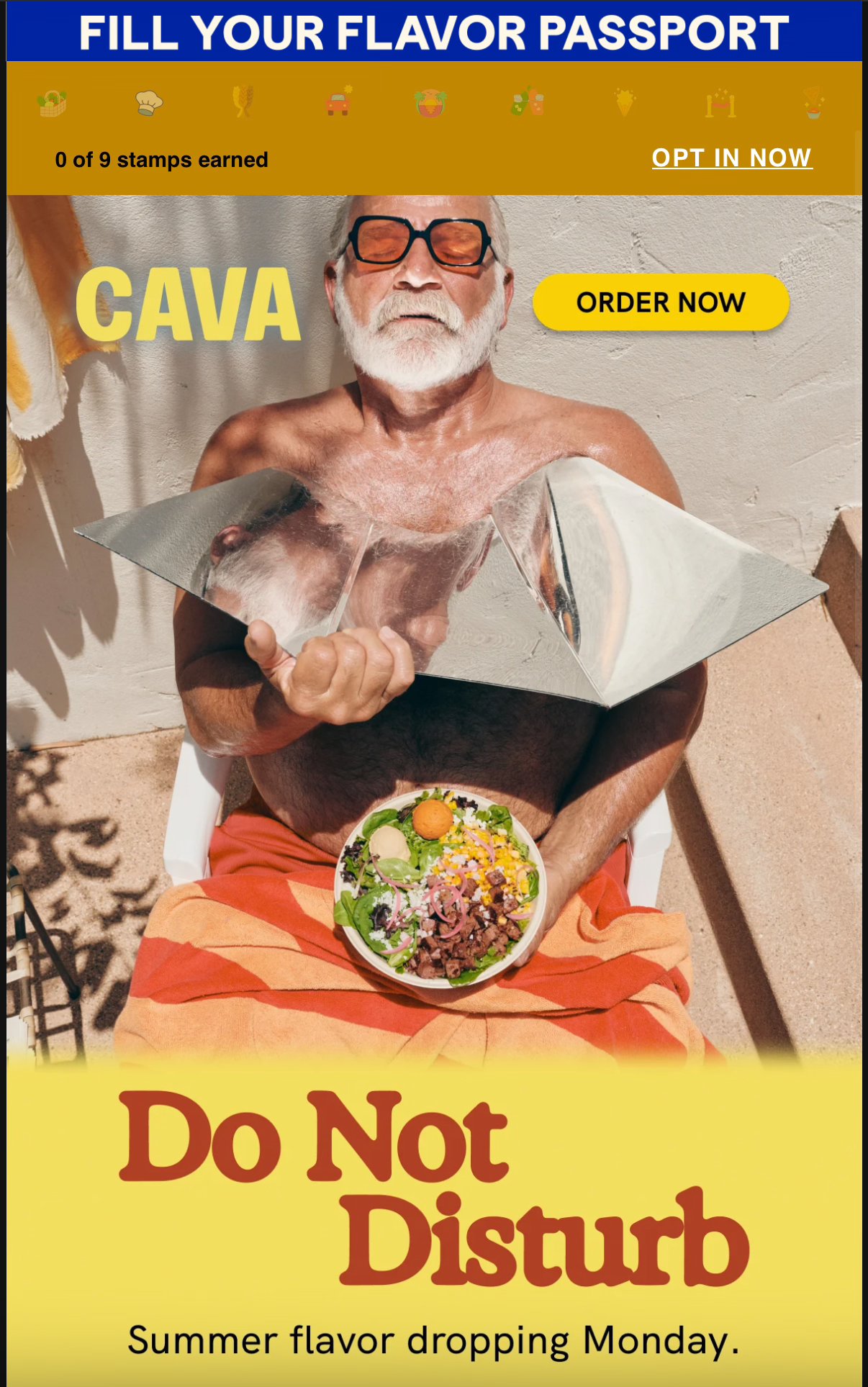
P.S. CAVA, you've emailed me 25 times this summer and you don't have a single location in Las Vegas. That's not marketing, that's a long-distance relationship. Come to Vegas.